The IRIE Awards

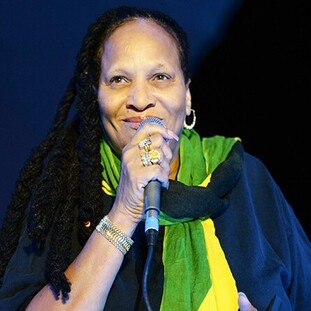
Sister Nancy

Sister Nancy

In the world of Jamaican music, where female icons are few but mighty, Sister Nancy’s original voice has resonated for decades. Born in Kingston, Jamaica into a huge family, she began her time as a dancehall DJ and singer in the late ’70s and early ’80s, alongside her brother Brigadier Jerry and the Chalice, Blackstar, Stereophonic and Jahlovemuzik sound systems.

Whilst collaborating with artists such as Jonny Osbourne, Yellowman, Capleton and Angie Angel on over two dozen EPs and singles throughout the ’80s and early ’90s, it was the release of her 1982 debut solo album One, Two on reggae label Greensleeves that made her a star.

Sister Nancy’s high-pitched patois vocals often meander among the crackling bass, whopping horns and playful use of space, a combination that saw her song “Bam Bam” become a reggae classic – largely unbeknownst to Sister Nancy herself, though, who only learned of its cultural reach after moving to New Jersey in 1996, where she lives with her family and worked as a bank accountant for 15 years.

Although she never reached the commercial heights of some of her dancehall peers, the influence of Sister Nancy remains – hip-hop stars such as Kanye West, Lauryn Hill, Main Source, Too $hort, Chris Brown, and Pete Rock and C.L. Smooth have sampled “Bam Bam,” among others, and she remains a towering figure for female dancehall and reggae artists worldwide.
Errol Dunkley

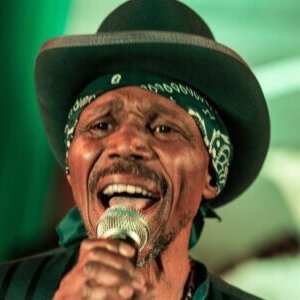
Errol Dunkley

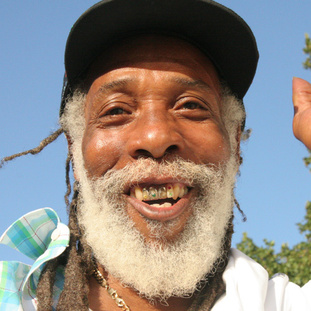
Jamaican reggae pioneer, Errol Dunkley, bridged the roots music of ‘60s Jamaica with London’s Brit-reggae scene of the ‘70s. Dunkley’s biggest hit, a remake of John Holt’s “OK Fred”, barely missed the UK top ten in 1978 and was re-recorded as a duet with Queen Sister *N* in 1996. Dunkley went on to work with many of Jamaica’s greatest producers. He founded the African Museum label with Gregory Isaacs and scored the imprint’s first hit single, “Movie Star”, alongside moving to London and signing with the Shelley Recording Company.

Dunkley continued to build a following in the United Kingdom and Europe. His first British hit, “A Little Way Different”, released in 1974, was followed by UK releases such as “Happiness Forget”.

Big Youth

Big Youth

Among the first reggae artists to profess his Rastafarian beliefs in music and best known for his work in the early and mid-1970s, Big Youth broke into the Jamaican mainstream after a number of disappointing releases when the motorcycle-inspired single “Ace Ninety Skank” hit the charts. Big Youth’s style quickly made him the most popular artist in Jamaica, where he enjoyed fame and sales that rivaled even those of his contemporary, including Bob Marley at the time. 

Big Youth was born Manley Augustus Buchanan in Kingston, Jamaica, in 1949. One of five children raised by his mother, a Christian preacher, and his father, a police officer, he grew up in chaos and poverty; Manley had a strong will and often clashed with his parents. He left school at 14, determined to make it on his own, and went to work as an auto mechanic at the Skyline and Sheraton Hotels in Kingston. Here he was first dubbed “Big Youth” because he was both younger and taller than his coworkers. After hearing him practice using his voice in the hotel’s large empty rooms, his friends told him he should try to deejay. He began to work at local dancehalls by night, where he developed his talent, talking and singing for an audience. By 1970 Big Youth was a regular deejay at Lord Tippertone’s sound system, a popular music scene in Jamaica where dueling deejays vied for the stage. Big Youth, with his deep voice and Rastafarian style, quickly became a star.

To understand Big Youth’s contribution to music one must first get a sense of the music scene in Jamaica in the 1960s and 1970s. In Jamaica deejays rap or “toast” their often-political messages over the instrumental B-sides of other artists’ melodies, a practice that many believe laid the foundation for much of today’s rap and hip-hop.

Although his early recordings didn’t catch on with the public, he kept performing, developing a unique casual and conversational style. His 1972 single “Ace 90 Skank” (also known as “S. 90 Skank”), produced by Keith Hudson, gave his career another big boost. The song, named after a cult Japanese motorcycle, was about riding the bike safely. Producer Keith Hudson actually brought the motorcycle into the studio to record its characteristic sound. The melody of “Ace 90 Skank” and Big Youth’s flowing rap caused an immediate stir in Jamaica and was his first single to go gold.

The artist’s first full album came in 1973, with Screaming Target, a powerful piece that produced a number of hits, including four that stayed in the Jamaican top 20 for a full year. His live performances were also becoming legendary. He would drive the audience wild with a quick flash of his incredible dreadlocks. He was, indeed, one of the first artists to don the style on album covers and on stage where it became a staple of the culture.


Owen Gray

Owen Gray

Foundation singer Owen Gray, also known as Owen Grey, was credited as Jamaica’s first home-grown singing star as he was the first singer on the island to sing in a style that wasn’t mento, calypso or jazz. His work spans the R&B, ska, rocksteady, and reggae eras of Jamaican music, but although he had a notable amount of hits under his belt and a lot of his recordings were of astonishing quality, the man was never highly regarded and didn’t receive the recognition he truly deserved. Perhaps the reason for this might have been his choice of material and direction that hasn’t always felt sincere.

Born in Jamaica on July 5th 1939, Owen Gray grew up in Trench Town, Kingston JA. He won his first talent contest at the age of nine, and was appearing in public, playing drums, guitar, and keyboards by the age of twelve. He attended the Alpha Boys School and started recording in 1957, making his first single “Who Saw The Lightning” for Smith’s Hi-Lite Records. Then, in 1959, Owen Gray was the first singer to praise a sound system on record with the tune “On the Beach”, celebrating Clement Dodd’s Sir Coxsone Downbeat system – one of the first releases on Dodd’s Studio One label. More tunes for Coxsone Dodd followed including “Hully Gully”, “Sinners Gonna Weep And Mourn”, and “Pretty Girl”, before he recorded his first single for Chris Blackwell in 1960 – “Please Let Me Go” on an easy shuffle riddim with a guitar solo from Australian musician Dennis Sindrey who was a member of The Caribs, a studio band that played on many early Owen Gray recordings. The single (with “Far Love” on the flipside) became a number one hit in Jamaica.

The single also sold well in the UK, as did subsequent releases, prompting the artist to emigrate there in 1962. His popularity continued throughout the 1960s, working with producers such as Clement Dodd, Prince Buster, Duke Reid, Leslie Kong, and Clancy Eccles, including work as a duo with Millie Small, with songs ranging from ska to ballads. By 1966 he was well known as a soul singer (Owen Gray’s great version of Ray Sharpe’s 1966 original “Help Me” is one of the steamiest soul dances ever recorded in the UK) as well as for his ska songs.

He continued to record regularly, having a big seller in 1968 with “Cupid”. His 1970 track “Apollo 12” found favour with the early skinheads, and in 1972 he returned to Island Records, recording reggae versions of The Rolling Stones’ “Tumblin’ Dice” and John Lennon’s “Jealous Guy”, although they met with little success. During this period he regularly had releases on Pama and its sister label, Camel Records. He had greater success in Jamaica, however, with “Hail The Man”, a tribute to Emperor Haile Selassie, which was popular with the increasing Rastafari following. In the mid ’70s Owen Gray arguably had his strongest period of songwriting and recordings, but towards the end of this decade he was no longer in the forefront of British black music. Since then Owen Gray mainly focused on singing ballads as well as gospel material.

Milly small

Milly small

Millie Small was a Jamaican singer who stunned the music business in 1964, when her wildly catchy breakout single, “My Boy Lollipop,” reached number two on both the U.S. and U.K. charts, and later went on to become one of the top-selling ska hits of all time. Just a teenager at the time, Millie never managed to top her initial commercial success, although she did record a second album for the Trojan label in 1970 which featured a more mature sound and included the politically charged single “Enoch Power.” Little was heard from Millie after she left the business in the early ’70s, though rumours of new material persisted up until her death from a stroke in 2020.

Born Millicent Small in Clarendon, she was the daughter of an overseer on a sugar plantation and was one of the very few female singers in the early ska era in Clarendon. She was already recording in her teens for Sir Coxsone Dodd’s Studio One label with Roy Panton (as Roy & Millie), with a hit behind her in that capacity (“We’ll Meet”) when Chris Blackwell discovered her and brought her to England in late 1963. Her fourth recording, “My Boy Lollipop,” cut in London by a group of session musicians that included guitarist Ernest Ranglin (and, according to some accounts, Rod Stewart on harmonica) and featuring her childlike, extremely high-pitched vocals, was the first (and indeed, one of the few) international ska hits and introduced global audiences to the bluebeat style. It remains one of the biggest-selling reggae or ska discs of all time.

Millie, who was known as “the Blue Beat Girl” on her album, was perceived as a one-shot novelty artist from the start because of her unusual, high-register vocals (which actually owed a lot to Shirley Goodman of the ’50s New Orleans R&B duo Shirley & Lee), and she only made the Top 40 one more time, with the “My Boy Lollipop” soundalike “Sweet William.” She did cut an entire album around the two hits — More Millie — which also included the first of several of her covers of Fats Domino material (“I’m in Love Again”), with whom she later recorded an album.

After her contract with Island ran its course, Millie recorded for Trojan Records; her first single for the label was an interpretation of Nick Drake’s “Mayfair,” but it was the B-side, “Enoch Power,” that received the most attention for its potent criticism of the anti-immigration stance of British right-wing politician Enoch Powell. They were included on her 1970 album Time Will Tell, which featured a more mature sound overall.

Although she continued to tour for a few more years, by 1973 Millie had more or less retired from the music industry. In spite of her public reticence, she granted a handful of interviews over the following decades, teasing that she had been working on new material. In 1987, Jamaica awarded her a Medal of Appreciation and later, in 2011, granted her the Order of Distinction for her contributions to Jamaican music. Millie died on May 5, 2020 following a stroke.

Tony Williams

Tony Williams

Pioneer radio DJ Tony Williams, who once had his own reggae show on BBC Radio London between 1977-1987 and was also the creator of the British Reggae Industry Awards which highlighted the talent of many UK reggae artists, has passed away in London on Monday, April 30 after he had been ailing for some time.

Tony Williams took over the Reggae Time show on BBC London from Steve Barnard in 1977 and after renaming it ‘Reggae Rockers’, he made it one of the most popular reggae shows on the airwaves in London on a Sunday afternoon with a special emphasis on British talent.

He later went on to recognise the work of these artists by establishing the British Reggae Industry Awards which catapulted many UK artists to international success, with some still referring to the industry awards as their most covete.

Tony was always pushing for reggae music to be played on the radio airwaves and he did this by running his own stations including Rockers FM and Rhythm 365 – they did not have commercial licences but nonetheless served community-based listeners and supporters.

Tony was always driving for reggae music to be played on the national airwaves, he tried many things to bring reggae to the forefront and allowing artists to get the recognition they deserved. He was all about bringing the music, whether it was on the radio or in the clubs.

Tony Williams is survived by his wife Sharon and children.

Carlene Smith

Carlene Smith

Carlene Smith is Jamaica’s first Dancehall Queen. She was crowned Dancehall Queen in 1992 after she and her crew competed against well-known models in Jamaica. There had been other Dancehall Queens before her but she started the national spotlight on a reign that was usually isolated to the Jamaican garrisons.

There is no woman in the history of Jamaica’s entertainment industry that is distinctively sexually attractive and proud of their body like Carlene. She is classified as Jamaica’s “Marilyn Munroe”.

Carlene revolutionized the Jamaican Dancehall culture with her fearless fashion and fiery dance moves. She represents the outré fashions and hard-core sensibilities of the Dancehall world, so naturally her fans and the media couldn’t wait to see what she would be wearing at her next performance.

Carlene is Jamaica’s first Dancehall Queen and the undisputed Queen of the Dancehall. In the 90’s she was the trendsetter in the Dancehall with her skimpy stylish fashion and dance techniques. Despite of her association in the ghetto and the Dancehall, Carlene had a middle class upbringing and was raised in the district of Ravina, St. Andrew, Kingston by both of her parents; her father is from a German descendant. She was educated at the Alpha Preparatory School, Excelsior High School and further her tertiary education in the U.S.A. During her teenage years she would show-off her dance talents at local fêtes and teen jams.

Carlene has performed around the world and sold out venues. Her fans admire her for her light-skinned, curvaceous body; many described her as the “uptown, brownin” or the “clean-skin Dancehall Queen” also being admired for her risqué fashion, colorful wigs, attire in a lot of fashionable jewelleries and sporting sexy body piercing. She has performed with popular Jamaican artists such as Shabba Ranks, Junior Tucker, Carlene Davis, Ninja Man, Chaka Demus & Pliers, and Lady Saw etc.

General Saint

General Saint

Born Winston Hislop in Jamaica, dancehall deejay General Saint first made a name for himself performing with deejay Clint Eastwood (Robert Brammer) in Great Britain. 

First recording with Junjo Lawes, Eastwood & Saint became noted for putting on lively, theatrical and humorous performances in the late ’70s through the early ’80s. At the height of their popularity they were known as one of Jamaica’s better novelty acts. The two split up to pursue solo careers in the mid ’80s. Their biggest selling album was ‘Two Bad DJ’ in 1981).

At the time, Eastwood was already an established solo deejay who had recorded several albums when he teamed up with British deejay General Saint.  Their first release was “Tribute to General Echo”, about the recently killed ‘slack’ DJ.

General Saint then went on to have a solo career, releasing singles such as “Save the Last Dance for Me” and ‘Oh Carol’ (both featuring Don Campbell).

He’s always been a storyteller, and his first book ‘Rebirth – Nanny A Maroon Warrior’ is a testimony of his narrative skills.  The trailer graphic for the book propelled him to to becoming a Game Developer, bringing diversity into the gaming industry by turning his book into a gaming app.

Carl Bradshaw

Carl Bradshaw

Carl Bradshaw is a Jamaican actor and film producer. He is the country’s most renowned and “arguably Jamaica’s premier actor. ‘ Bradshaw grew up in the tough Kingston ghetto of Standpipe. He was a keen actor and athlete as a teenager, and his talent won him a scholarship to the University of Pennsylvania. Bradshaw represented Jamaica in athletics and was the head of Physical Education at his alma mater, Excelsior High School.

He became famous when casting as Jose, one of the lead roles in the 1973 Jamaican hit film, The Harder They Come. He has since had leading roles in several films, notably: The Lunatic, Smile Orange, Country Man, and Dancehall Queen. He also went on to act in most of the notable Jamaican films including, Third World Cop, One Love, No Place Like Home, Wah Do Dem, and The Skin.

Carl has won several awards for his acting, including the Doctor Bird Award and the Carifesta Film Festival  Award of Excellence.

Carl grew up in the Kingston ghetto of Standpipe, and was educated at Excelsior High School. He was a keen actor and athlete as a teenager and his talent won him a scholarship at the University of Pennsylvania. He received a master’s degree in Physical Science.

He represented Jamaica in the 400m in 1968. He also competed in the 400m hurdles. He went on to take up the role of Head of Physical Education at Excelsior High School, where he was working when he was cast as Jose, one of the lead roles in Perry Henzell’s 1973 film The Harder They Come, after initially getting involved as an extra. Bradshaw described how the role originated: “When I met Perry, there was no script. He asked me to make up a story for my character, so I gave him a line about some guy who’d owed me money for ages.”

He took the lead role of Ringo in the 1976 film Smile Orange, and also had roles on Countryman and Dancehall Queen, which he also co-produced while Director of Operations for Island Entertainment Jamaica. He went on to act in most of the major Jamaican films, including Third World Cop, One Love, Henzell’s second film No Place Like Home, and the 2009 film Wah Do Dem. He played a Jamaican mystic in the 2011 supernatural thriller The Skin.

Carl has won several awards for his acting, including the Doctor Bird Award and the Carifesta Film Festival Award of Excellence, and has been described as “Jamaica’s most renowned actor” and “arguably Jamaica’s premier actor”.

The IRIE Awards